


The Call of the Gannets
Two columns rise at the edge of the sea, in the storm-lashed North Atlantic. Each year, on the verge of spring, they give bearing to migrating birds – gannets that return to the westernmost tip of the Faroe Islands, to build nests and lay blue-sheened eggs.
For several months, black-tipped wings edge a cloud of white bodies spiralling above the rocks, dissolving again each September as the birds depart for the sea.
A traveler from the other end of the world first made these columns emerge on my map: an albatross that crossed the Equator 160 years ago, coming to live on these rocks as an exile from home.
Bred on the southernmost rock of Patagonia, the story goes, the Black-browed Albatross logged a journey of some 10,000 miles – on a route nobody knows exactly – before it reached this last land in the sea.
Each autumn, when the gannets moved out to the sea, it followed on their migrations. And at the verge of each spring, for three decades and more, it returned with the birds to their rocks where the Faroes fray out.1
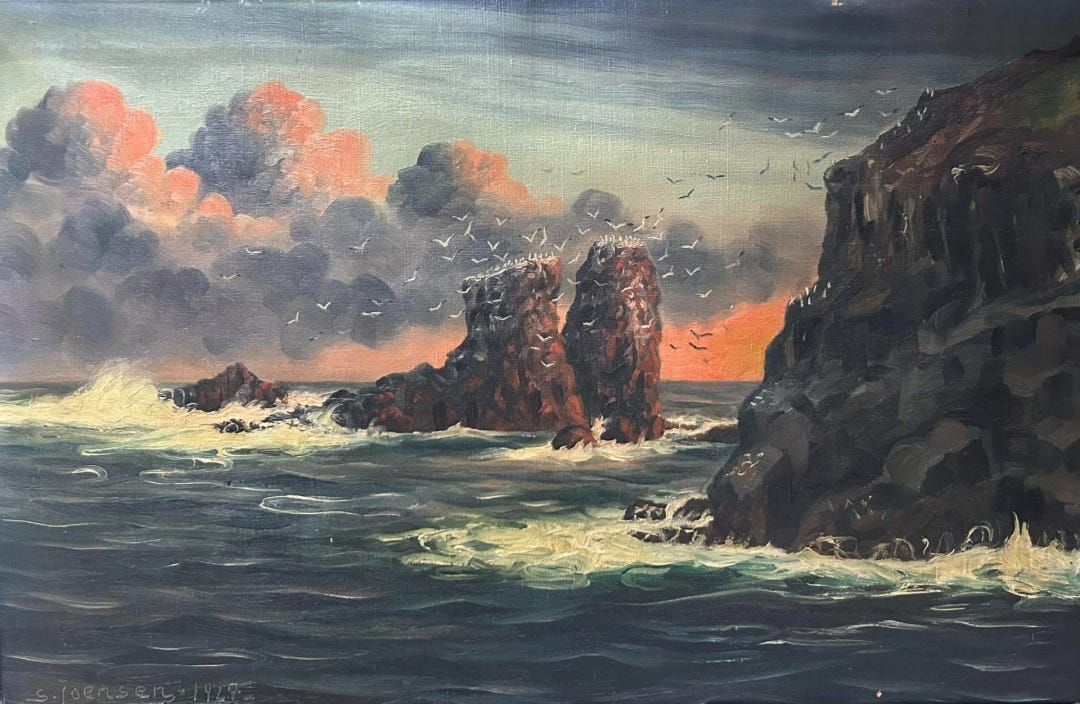
The first time I saw the two columns was in the work of an artist.
In 1906, a boy was born on the outermost of the Faroe Islands. Unlike most of the men in its village of 100 people, he would become neither a fisherman nor one of the bird-catchers who dangle on horse hair ropes from the cliffs and reach for the gannets at night – so much seemed clear as Sámal grew up.
At the age of twenty-two, he left the Faroes behind and crossed over the sea to study art in Copenhagen, as first from the islands. The village and its people the artist carried within. For a decade, they returned on his canvasses in shades of dark; echoes from the island he made part of his name.
Sámal Joensen-Mikines became the most famous painter from the Faroe Islands. Throughout a life torn between life in the city and the island where he was born, he would return to Mykines; would seek out the storm-tossed cliffs facing the sea.
On many of these walks, he would bring his easel and place it overlooking the two columns, as he had done dozens of times before.
Over decades, Sámal followed the cries of the birds out to the last land. With the strokes of his brush, he made the rocks and the gannets that circle above appear on his canvas, again and again.
Like the migrating birds, he returned to the columns, on the same path on which he had led an artist in the summer of 1924 – the year he met the painter who changed the course of his life.
The Summer of 1924
In May 1924, a Swedish artist disembarked from the post boat at Mykines.
Several times, he had tried to cross over to the storm-lashed island in the sea, making haste to arrive on time before the main migrations of birds set in.
For several weeks, the Swede took up residence in a house owned by a local merchant – the brother of Sámal’s mother. Across the shores of the island, the painter scouted for vantage points high up the cliffs that drop several hundreds of metres deep, where the seals play in the surf beneath.
On some of these days, the Joensen boy followed him out in the field. Sámal guided the Swede to places known to the island’s catchers of birds, to ledges in the cliffs where the puffins scurried, barely enough to place an easel.
The cries of birds circling above pierced through the roar of the surf as he watched the artist squeeze paint from metal tubes onto a wooden board. With his brush, he mixed their shades to thick paste and in rapid strokes made the ocean emerge, and the endless colours in which the sun played on the rocks of the island that Sámal called home.
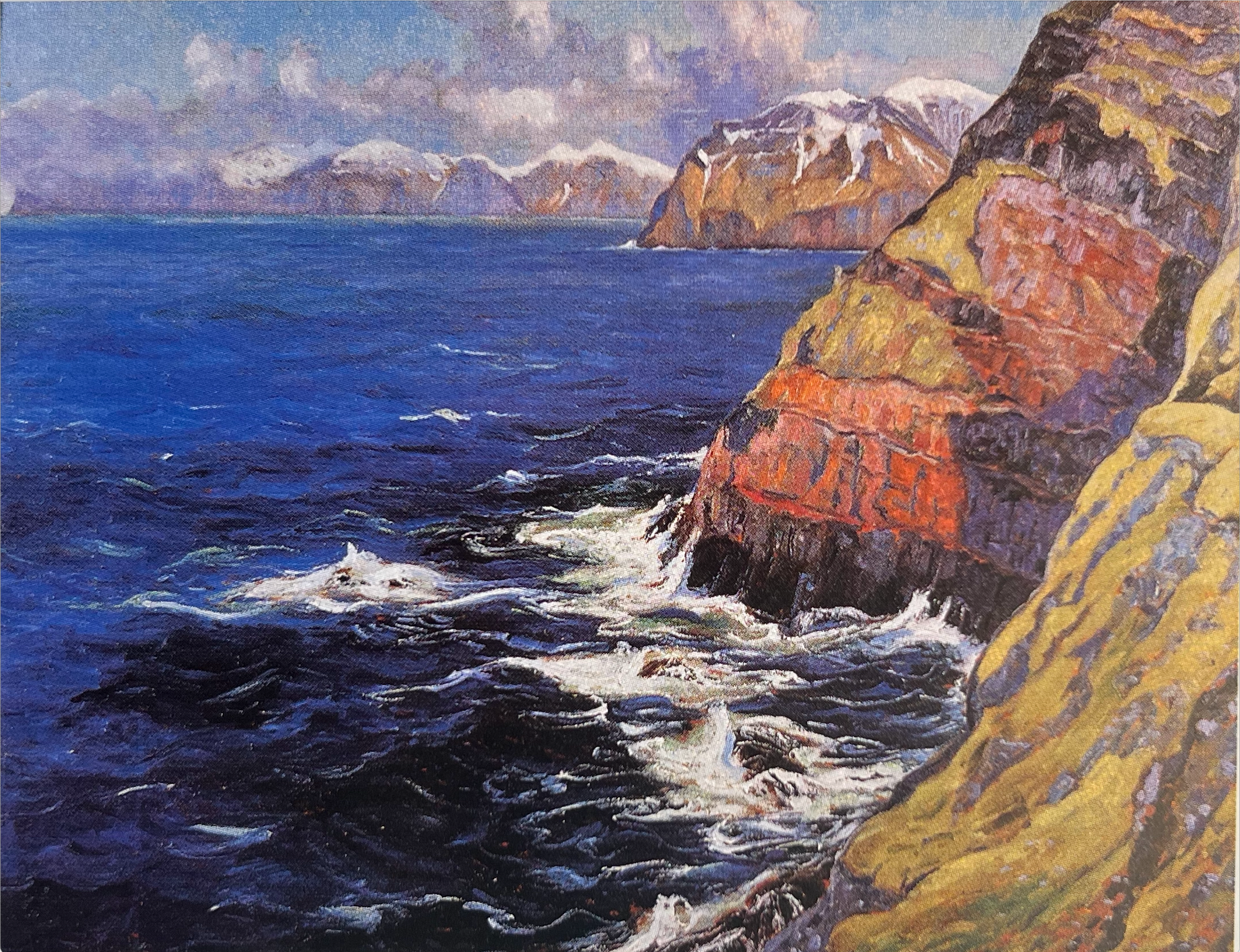
They were few on Mykines, and even fewer was the number of those who spoke openly. Yet by the summer when the Swede disembarked, many in the village had already written Sámal off as a failure.
All this began to change in those weeks when the boy of eighteen years encountered the painter from Sweden. “His glowing canvases”, Sámal later told his biographer, “ignited me with renewed force of life”.2
More than twenty works the Swede painted that summer alone on Mykines. Throughout his stay on the island, Sámal assisted the artist, carrying easel and painter box and leading him to ever new vantage points.
On some of their outings, Sámal picked up metal tubes the Swede had dropped on the ground. Cadmiumgult. Marsviolet. Caput Mortuum.
Scraping their rests, he took first steps painting on cardboard and plywood that he gathered back in the village – views of shores and seasides, as he had watched the Swede create them on canvas.
Overcoming shyness, he showed him his works. And throughout his life, he would never forget the words he spoke to him in thick Skåne accent – words that encouraged him to pursue the path of an artist.
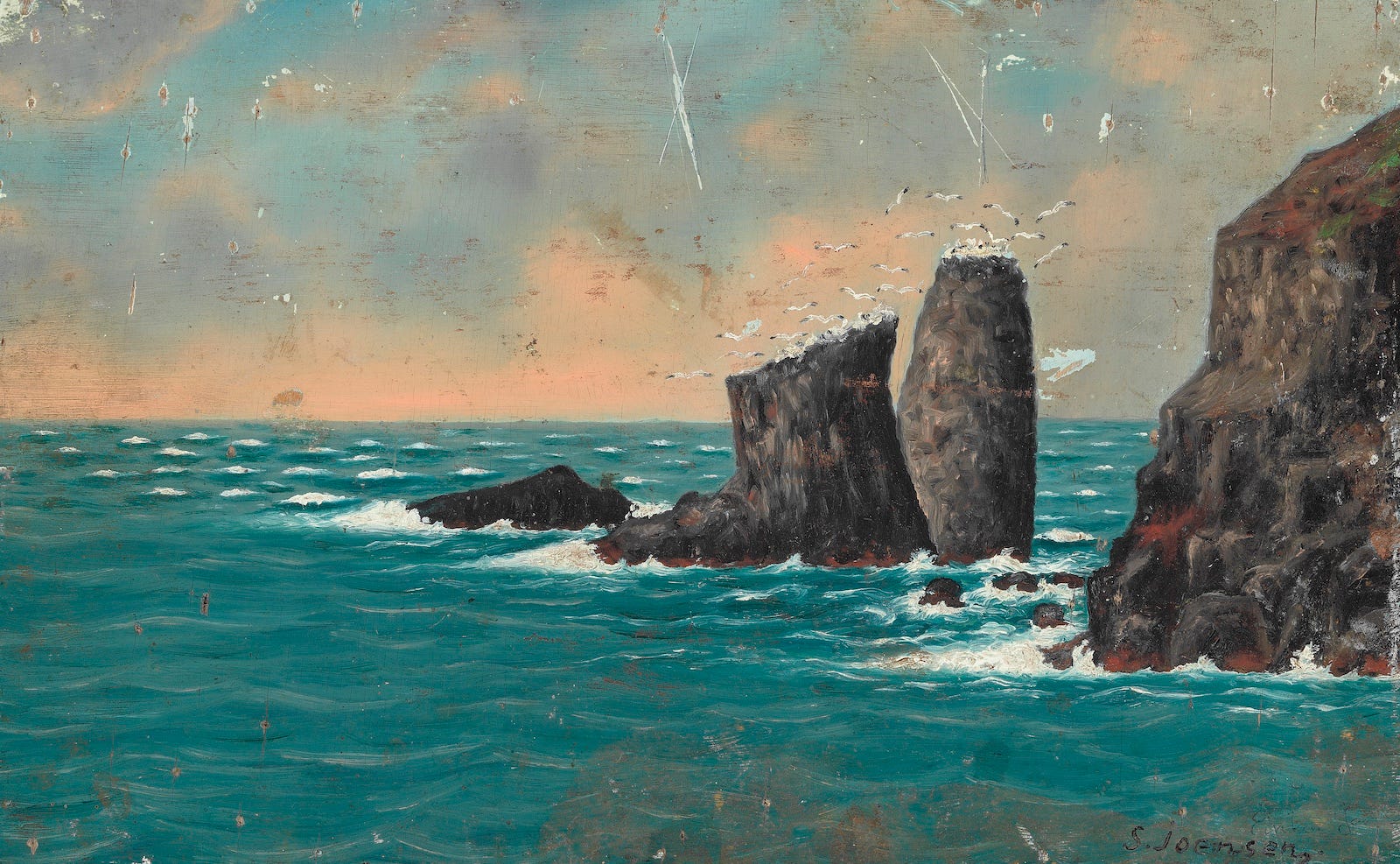
Genesis of a Bird Painter
Three years later, Sámal had his first exhibition on the islands – the one that won him the ticket to study art in Copenhagen.
The Swedish painter who left his mark on the Joensen boy that summer is a footnote to the opening chapters in the biographies celebrating the greatest of Faroese artists.3
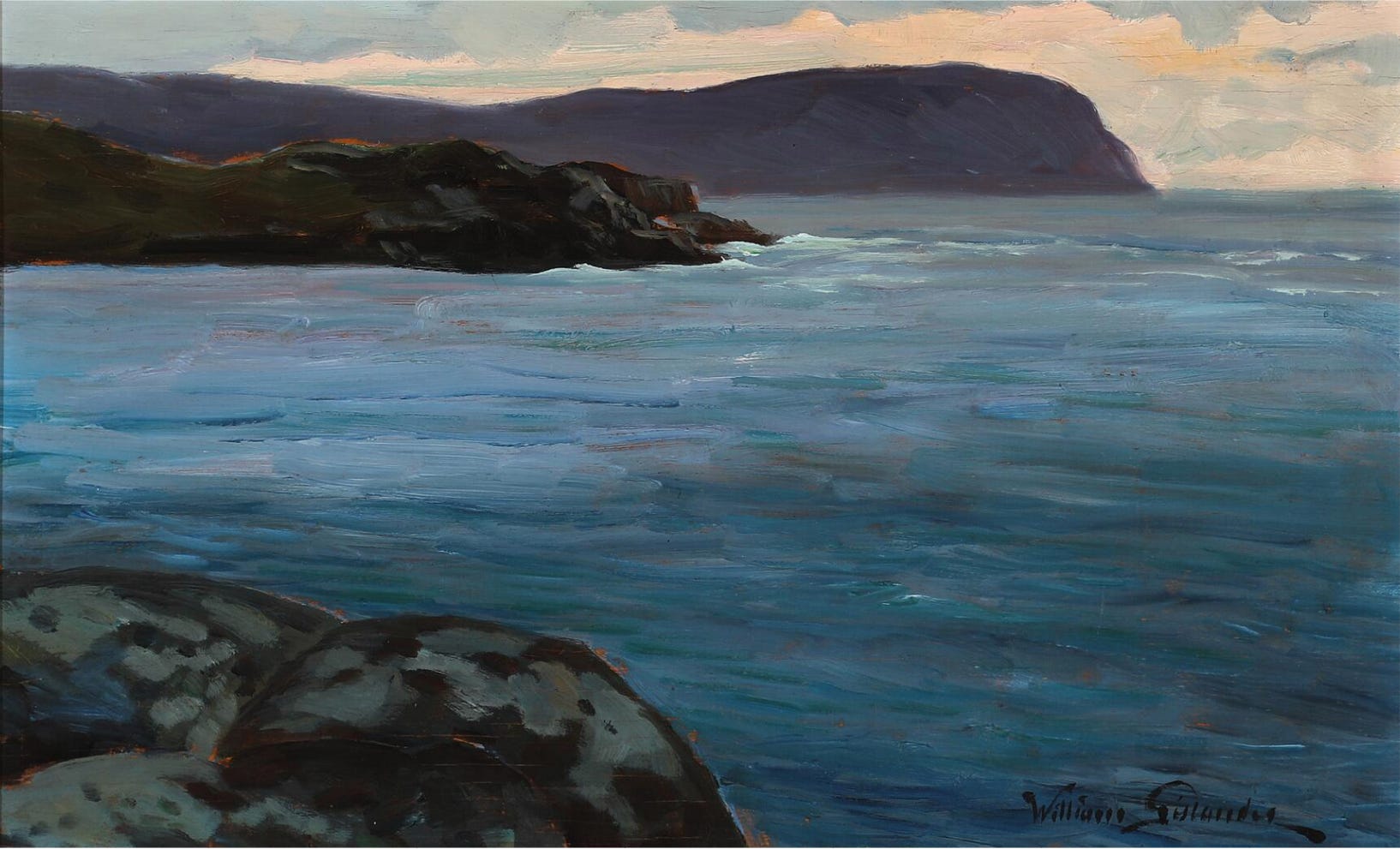
By the time he first set foot on Mykines, William Gislander had already been in the Faroes for almost half a year. When he left from the islands again in mid-September 1924, more than eighty paintings followed him on the steamer south.
Gislander’s importance lies less in a single masterpiece than in an event. In 1924, he gathered the Faroes – their cliffs and storms, the animals on land and in the sea and the birds in the sky above – into a body of images large enough to unfold a panorama of the islands in the Atlantic.
For a few weeks in Copenhagen, they appeared neither as a stopover nor as a distant dependency, but as a world in their own right. The exhibition they furnished still the same month was the first to give a blank in the mainland imagination scale and visibility.
A century later, this panorama of the Faroes survives only in fragments.
To this day, there is no article dedicated to William Gislander’s life and work. Of the roughly 100 paintings he produced on the Faroe Islands, around 95% have remained invisible in private possession.
Newspaper clips and memories passed on in the family are the main sources to trace the path that led this artist from his home in Southern Sweden to the islands in the North Atlantic.4
By the time William Gislander reached Mykines in May 1924, he was not an unknown painter. In southern Sweden and Copenhagen, the student of Nils Forsberg had made a name for himself in the 1910s as a painter of birds and coastal landscapes around the seabaths of Falsterbo – geese over marshes, swans on shallow waters, ducks lifting from the flats of Skåne.
Yet by the 1920s, the same motifs that had made him recognisable and provided a modest living were beginning to narrow around him. Critics admired Gislander’s knowledge of birds. Yet as his output increased, they also sensed repetition.
Newspapers referred to Gislander as the “goose painter” from Skåne, occasionally even teased as Gåslander (sv. gås = goose).
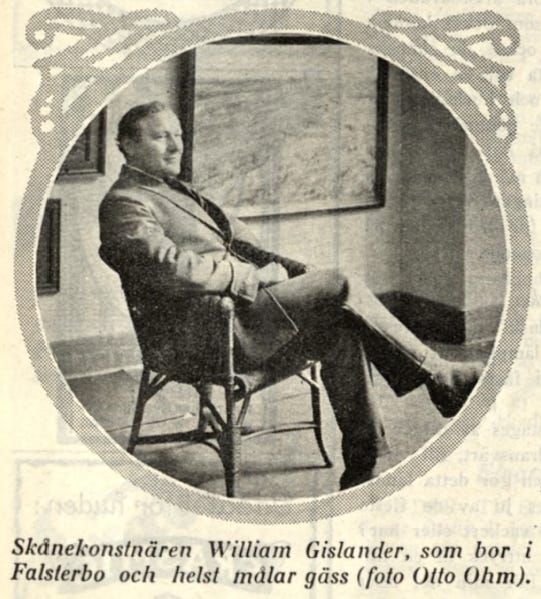
The Faroes offered a way out. Here was a landscape almost unseen in mainland art: dramatic cliffs, winter storms, midsummer nights, bird mountains, flocks of migrating birds, and colours unlike anything on the southern Swedish coast.
For a painter whose art revolved around landscapes and birds, the islands loomed large. According to Gislander’s later account, it was the zoologist and explorer Axel Klinckowström who first placed the Faroe Islands on his map.
Klinckowström knew parts of the islands from earlier scientific journeys and belonged to the elite circles regularly residing in the Falsterbo area where Gislander lived. With his suggestion, the pressure to expand his palette finally gained a direction.
In 1923, the painter geared up for a nine-month trip to the Faroes, leaving his wife Eva and his boy Stig behind, a few weeks before he turned four. On the Feast of Epiphany in January 1924, William Gislander embarked at Copenhagen on the steamer Sleipner instead, bound for the Faroes – on a journey that would make the islands visible in art.
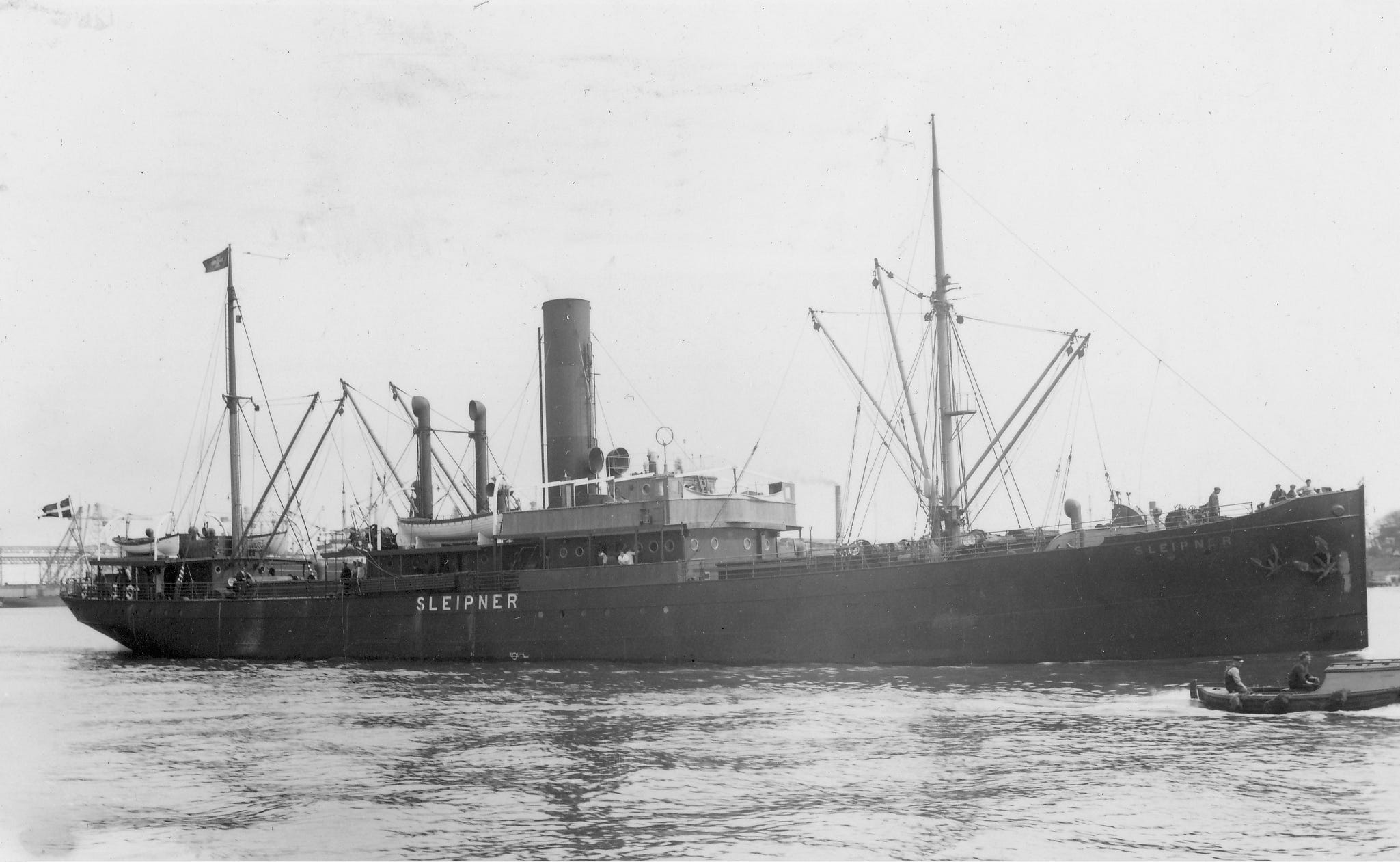
Motif Hunting on the Faroes
In mid-January 1924, William Gislander first lay sight on the Faroes as their snow-capped peaks emerged on the horizon.
For nine months to come, he travelled their length and breadth by foot and by boat, exploring the shifts of light and colours and the fauna across the islands. From metre-thick snow and cold that made the paint on his palette freeze, conditions changed to summers filled with crystal air and never-ending light.
Across all of them, Gislander observed the birds and their migrations, capturing them not only with the brush but with the rifle, as well.
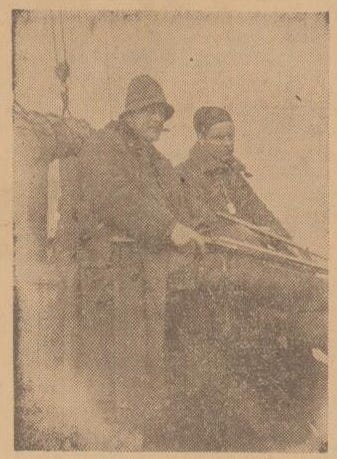
Close to a hundred paintings resulted from Gislander’s stay on the Faroe Islands.
Around the Feast of Ólavsøka at the end of July, more than half of them were on display in Tórshavn. Roughly two dozen were sold still on the islands.
In the second half of September 1924, Gislander embarked for Copenhagen again. At the end of the month, his paintings from the Faroes were planned to be shown at Den Frie Udstilling.
Seven years after he had last exhibited in this gallery, he returned with motifs that next to no one had seen on the mainland before.
The Copenhagen Exhibition
On 27th September 1924, the doors opened to the vernissage of the first exhibition ever dedicated to the Faroes outside the islands.
Across more than three weeks – the exhibition was prolonged due to great demand – more than 5000 visitors saw Gislander’s paintings from the Faroes.
Newspapers in Denmark, Sweden, and also the islands reported on the event at Den Frie. Journalists flocked around the artist with sea-blue eyes and shining blond hair, newly returned from the islands.
Visitors to the exhibition included the highest echelons of Danish society. Among them were Prince Knud, a hunting friend of Gislander’s.
On the afternoon of the 17th of October, his father King Christian X personally attended Den Frie, conversed with artist, and left with a painting of the islands he had visited on the way to Greenland in 1921.
Reviews of Gislander’s exhibition were overwhelmingly positive.
Critics who had followed the painter’s trajectory acknowledged the positive effect the Atlantic sojourn had exerted on his art. Finally, different birds, in a dramatic nature! The landscapes of the Faroes, so reviewers agreed with the artist, had awakened forces slumbering in Gislander.
Proudly, Swedish newspapers reported on the fact that the Danish king himself attended the exhibition by the Skåne artist. While they hailed Gislander’s exhibition as national success, on the Danish side the same event sparked political debates about the role of art and statehood:
Why did it have to be a Swedish painter to steal these gems in the Danish crown? And how could the nation ensure that, in the future, its best artists would make the Danish possessions in the North Atlantic visible as part of the kingdom?
The success, however, did not last for Gislander.
The years after the exhibition, he continued to move between Skåne, Småland and Copenhagen, painting landscapes and birds in Denmark, Holland and Sweden. Yet never again does he seem to have surpassed the Faroese moment of 1924.
His last major exhibition followed in 1931. Six years later, after contracting pneumonia on a journey to Småland, he died in Vetlanda at the age of forty-six.
Soon after, the traces began to thin.
In 1962, twenty-five years after his death, the Art Association of Vetlanda commemorated William Gislander with a modest retrospective.
None of the works shown came from the Faroes.
Ever since, his name and the panorama he opened in the North Atlantic have continued to fade from view.
The First Trace
For one century, Gislander’s 100 paintings from the Faroe Islands have practically remained invisible.5 From a few lines about Gislander’s life and work drawn together in the Lexicon of Swedish Artists, I set out to find the pieces of a puzzle.6
First traces I found in the form of sales notes and thumbnail images from private auctions, textual descriptions of Gislander’s 1924 paintings as discussed (and sometimes printed) in historical newspapers, fragments of documentations surviving in gallery archives, acquisition notes, and replies I received from private collectors, museums and libraries, and auction houses.
Among these blips on my radar, there was one that brought a first set of pieces from the Faroe puzzle into my reach – a trace that led me straight to Copenhagen.
The winter after Gislander exhibited at Den Frie, the Praesidium of the Danish Parliament (Folketinget) bought one of his Faroe paintings: a note printed that year, announced the acquisition of a work with the title Storm at Kirkebønæs, Faroe Islands.
On top of the sale, the note adds, the Swedish artist gifted the institution two further artworks, their titles given as The Bright Nights. Motif from Højvig, and Evening Mood from the Fjäll of Mykenes.
The paintings, the note informs, are hung in Christiansborg Castle (the seat of the Danish parliament) – in the public area today known as Vandrehallen.7
Landscapes Filed with Birds
“We still have the paintings”, Maria replied to the email I sent to Folketinget right after I had read the acquisition note.
“One of them is on display in the office of a member of parliament, the other two in the depot.”
We met a few weeks later, after I had passed through security at Christiansborg.
“The Danish Parliament owns about 3000 artworks”, Maria explained as we walked up the stairs. “The members can choose which ones they want to have in their offices.”
“Do we know when and why Gislander’s paintings were removed from this area?”, I asked as we passed the Vandrehallen.
“No, it seems we don’t,” Maria said.
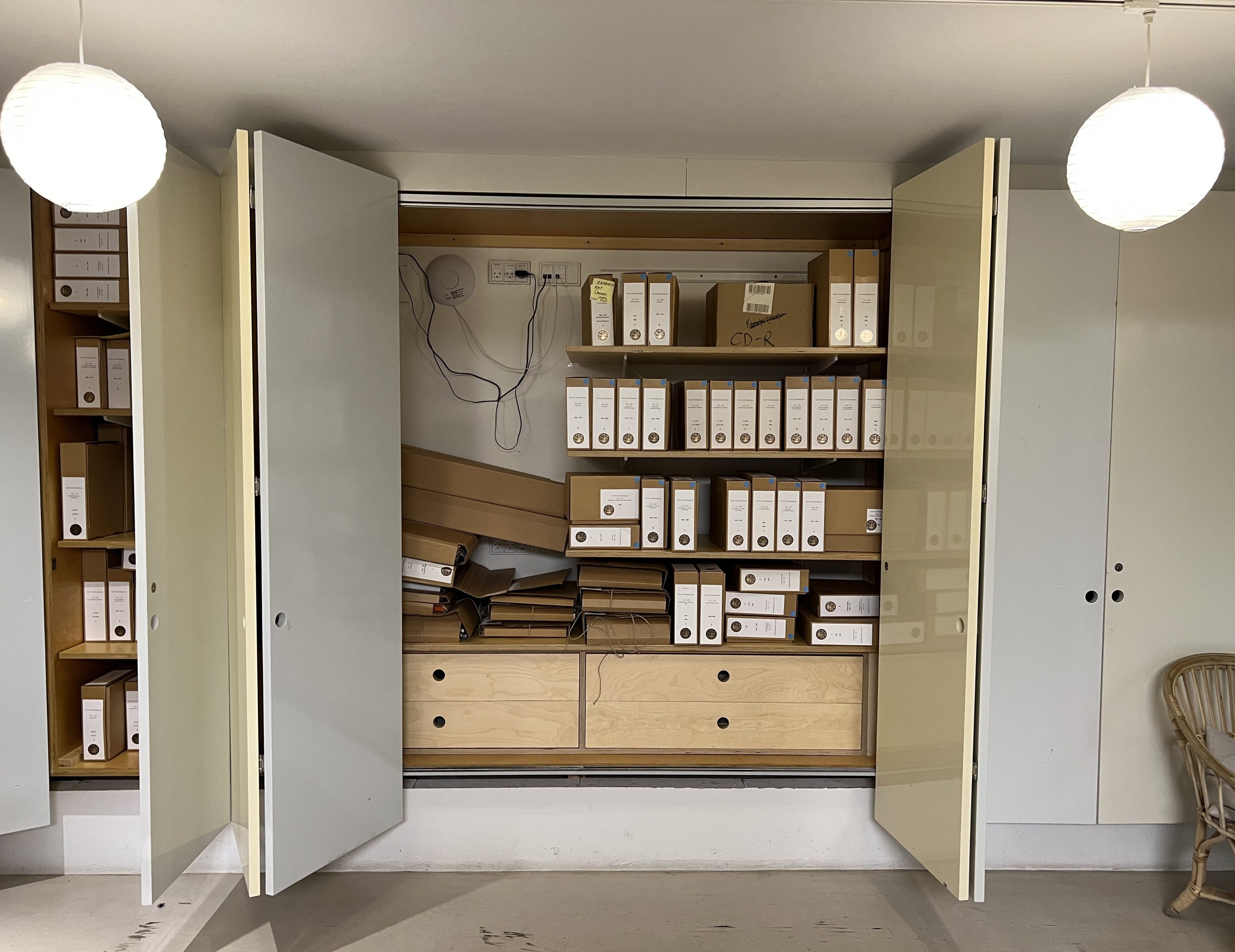
Swiping her card, she opened a security door to the depot: staggered wire grids on roller rails, both sides covered to the top with paintings.
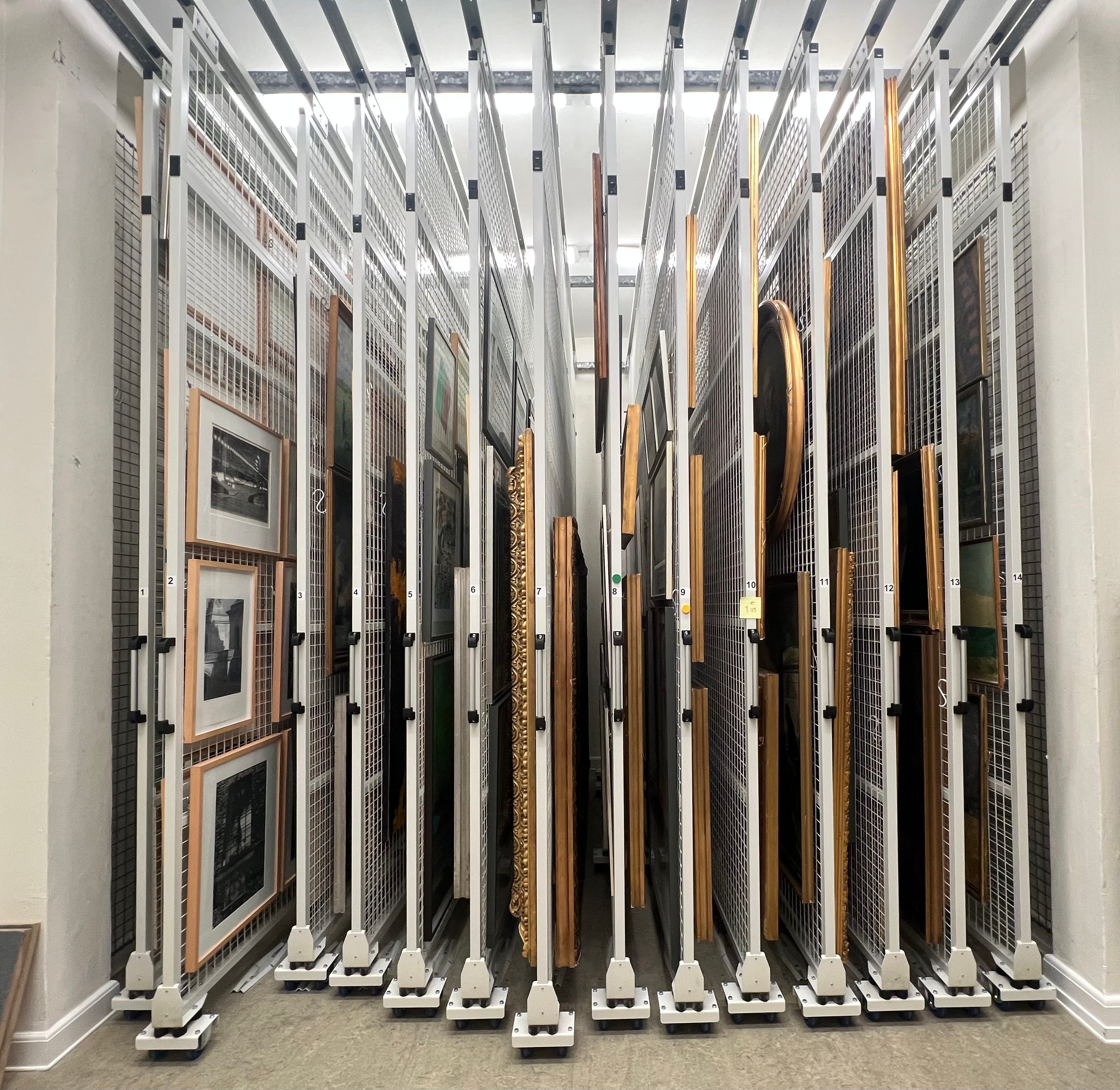
Maria pulled out one of the grilles.
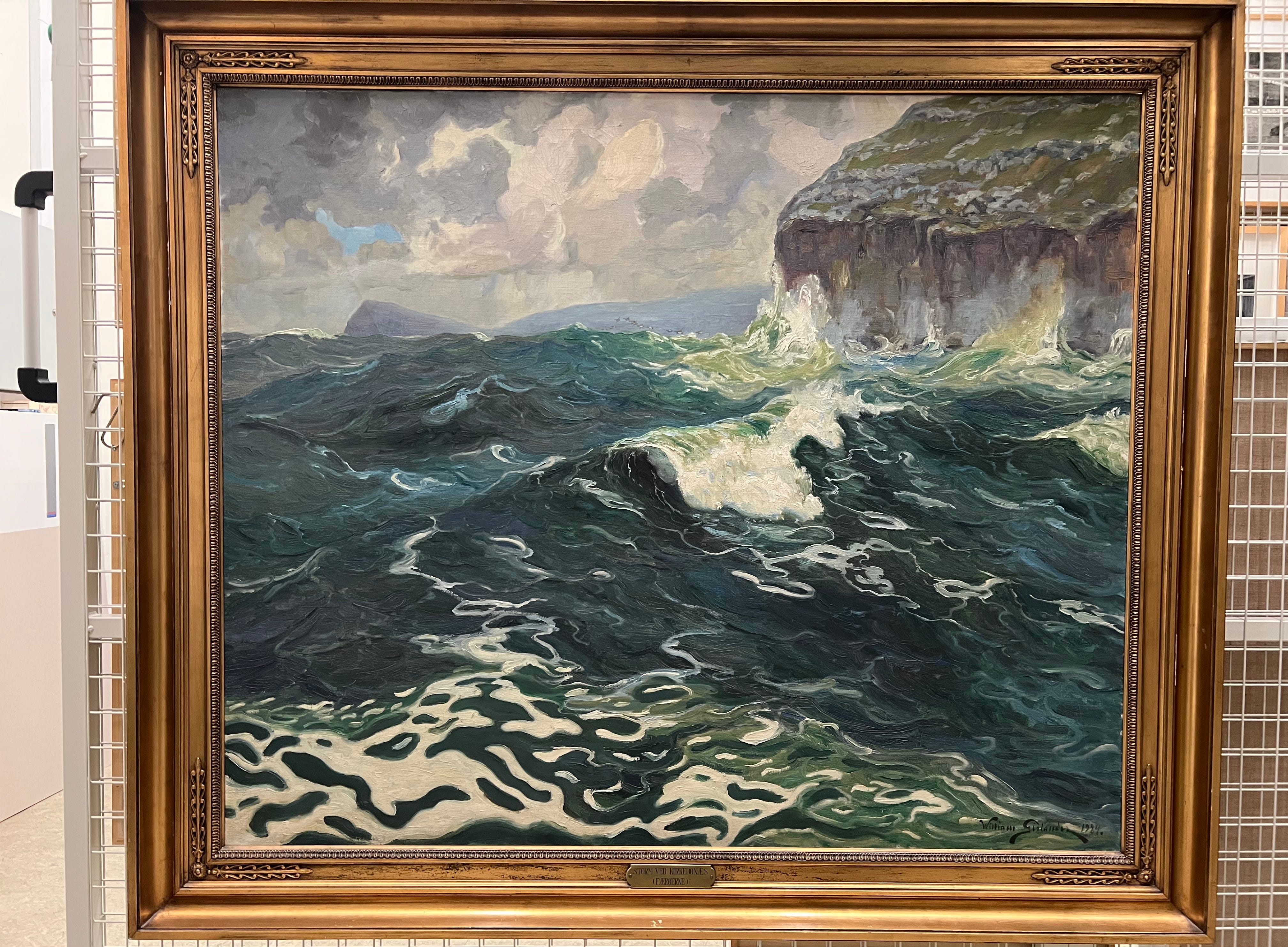
Within a gilded frame, I saw the painting of a stirred-up sea, the swell surging high against a promontory. Where the crests of the waves curl, the waters break into a translucent green. This was “Storm at Kirkebønæs (Faroes)” – the painting the parliament had originally bought.
Only as I moved closer, I noticed birds Gislander had added above the spray, almost invisible to the eye. On the avian specks, he had placed dots of white – a flight of guillemots, their bright bellies turned towards the viewer as the birds skimmed the sea against Æðuryggurin, the silhouette of Héstur Island.
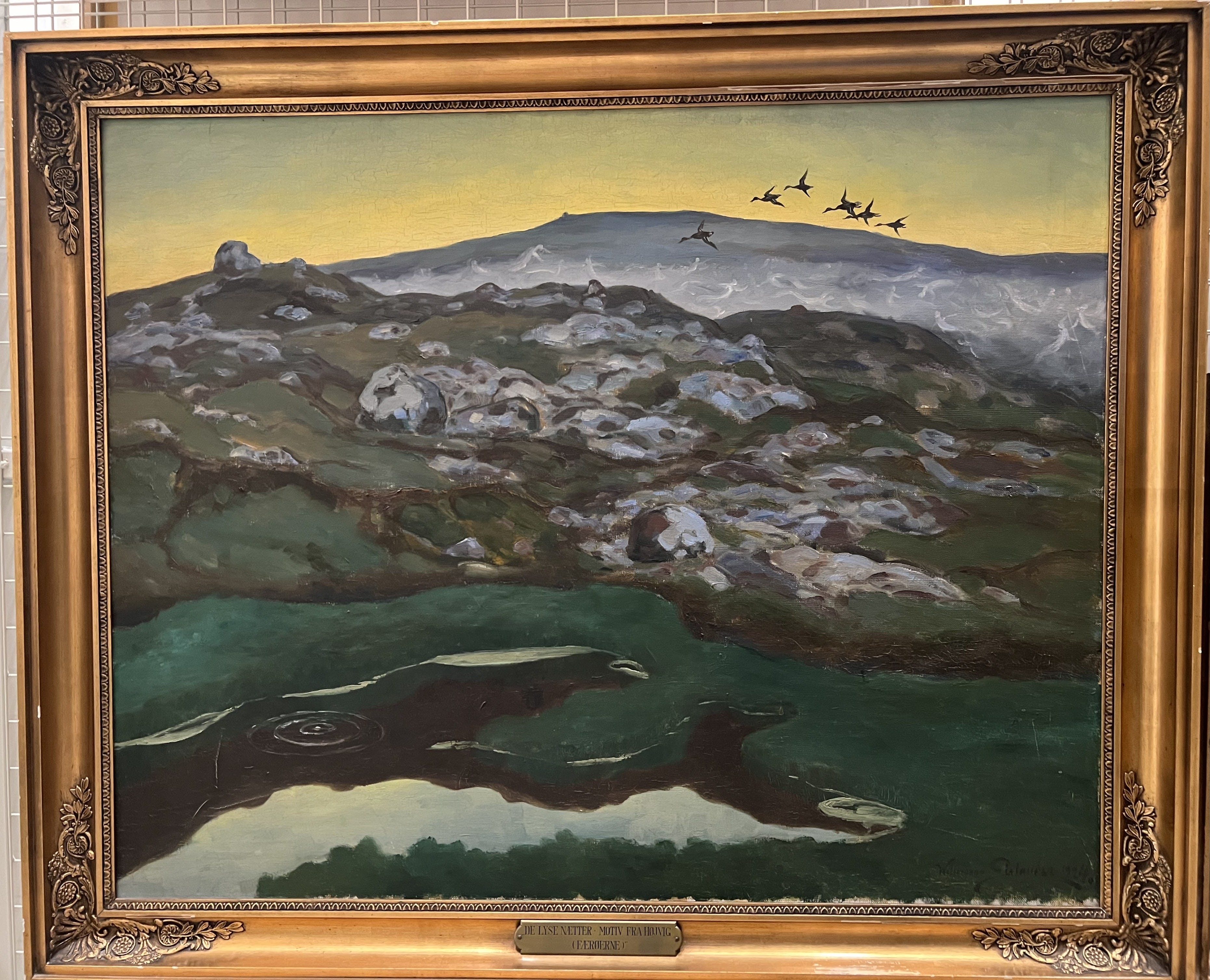
From the depot Maria pulled out a further grid.
From a green-blue sea that fills the foreground rises a slope dotted with boulders. A flock of back-lit coastal ducks makes its way over the ridge, across a sky in the yellow tones of Midsummer and hints of dusky blue. Pollamjørki rises from the hollow that drops behind the slope – the mist that creeps up the fjords of the Faroes at this time of the year.
This was “The Bright Nights. Motif from Højvig (Faroes)” – one of the two paintings Gislander had added to the 1924 sale.
The Final Chord
The way to the third painting led us to the office wing of the Parliament.
On the stairs, Maria stopped for a chat with a politician, my age perhaps.
“He has a Mikines in his office”, she dropped as we continued.
We stepped down towards a corridor that unfolded as an endless series of doors; a narrow avenue cozily lit by ball lamps dangling from the vault, illuminating what seemed a Danish take on the Sibyl’s Cave at Cumae.
“This is part of the old Ridebane,”, Maria commented as we made our way down the corridor, our steps muffled by the carpet. “The royal stables.”
“This is the only part remaining from the old Christiansborg.”
Door after door followed to the left, until Maria stopped and knocked at one of the offices. The Member of Parliament was in.
Still shaking Sandra’s hand, I noticed the paintings behind her – a volcanic wasteland she had chosen as motif over her desk, furrowed by deep gorges.
She had gone for a kind of structured landscapes in both of the artworks she picked for her office, Sandra later explained. It corresponded with the one on the opposite wall – the painting for which I had come.
The third Gislander. The note to conclude the triad.
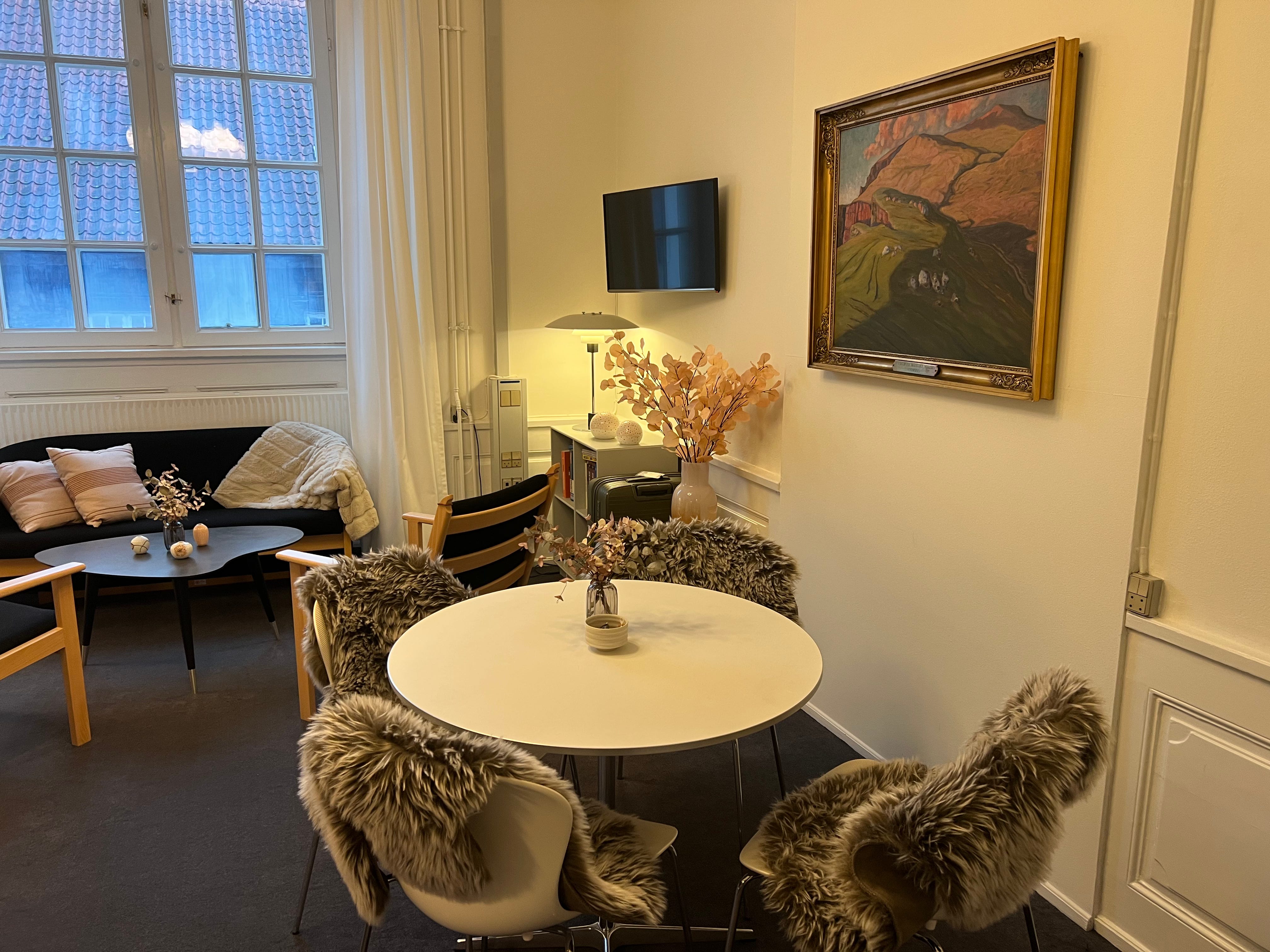
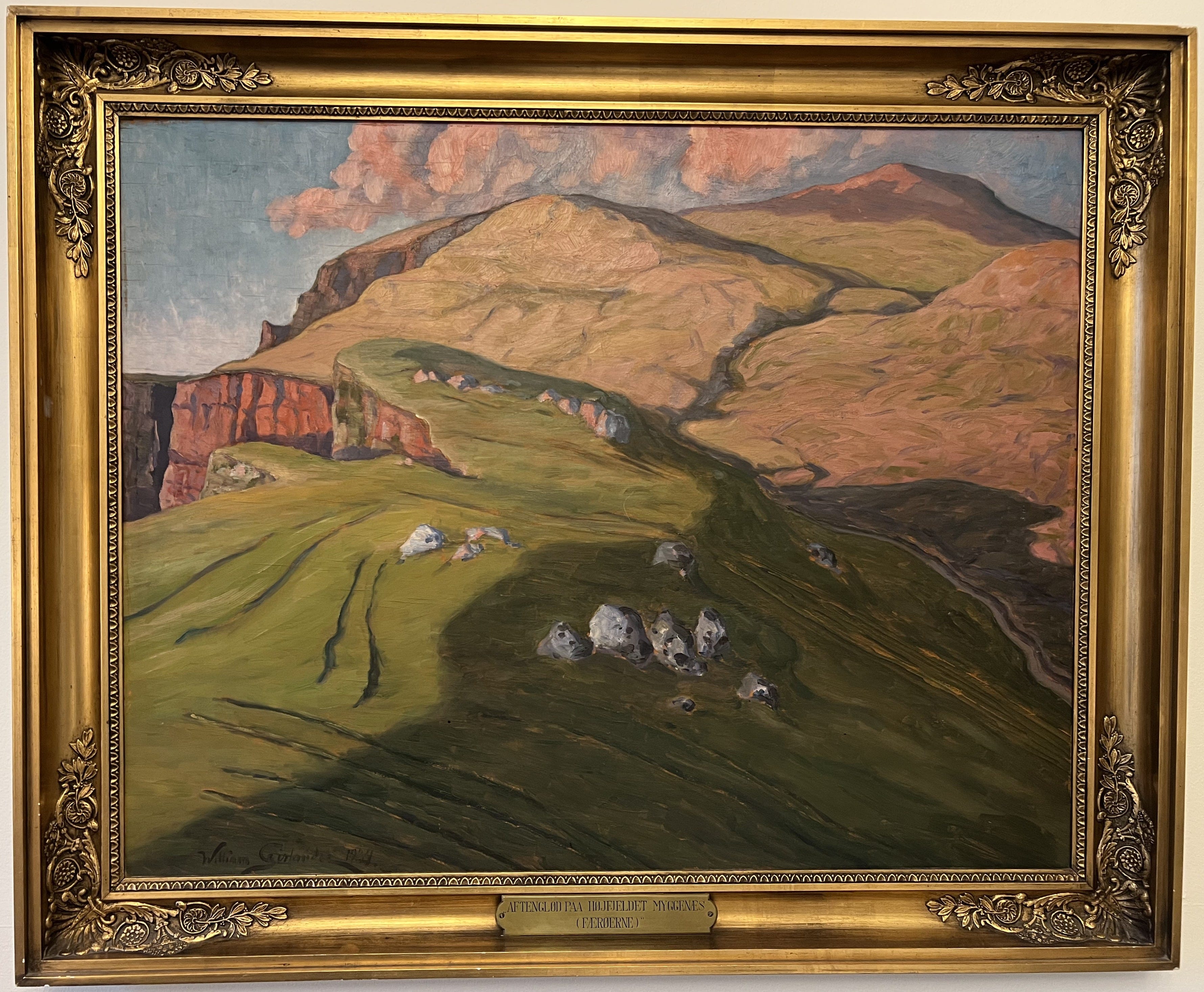
“Evening Glow on the High Fjäll, Mykenes (Faroes)”, the brass label read below.
For a moment, I felt carried into the fields above the village, on one of the days near mid-summer. Grass covers the slopes as they rise into the background, until its verdant cover thins out where the island reaches highest into the sky.
A rosy hue has already touched the clouds above, the colour that remains from the light’s passage through the atmosphere near the Atlantic horizon.
The last hour of sun illuminates the west-facing cliffs of the island. On the opposite side, shadow has begun to move in across the furrowed ground. Its edge rises up from the village side, as if levered upward by the sinking sun – a diagonal cutting the foreground in half.
In the bottom left corner, darkness has already engulfed the name of the artist.
The eighteen-year old boy from the village who followed the artist around during those days in summer – he continued his journey into the light of artistic fame.
By the time Sámal Joensen-Mikines had made a name as a painter, the memory of the Swede whose art first inspired his path was already fading.
Before I followed Maria out again into the corridor, I turned around between the door jambs, taking a last glance at the painting.
Behind one door in a row of dozens that looked the same, there it hung – a painting that was a piece within a puzzle of a hundred; one stone in the mosaic through which William Gislander had once made the Faroe Islands visible.
As we embarked on the walk back to where our circuit had begun, I couldn’t help but wonder:
How many more were still waiting to be found?

Further Readings and References
All translations and photographs are my own unless stated otherwise.
Acknowledgments
I am deeply grateful to all the people and institutions who supported the wider research underlying this project as abridged into this introductory article. You can find them in the acknowledgments of the project.
For this article, I would like express particular thanks to Maria Louise Sargant and Sandra Skalvig for their support at Christiansborg.
Following the trace of this bird from Isla Navarino to the Copenhagen Zoological Museum will be the subject of a forthcoming article.
See Ernst Mentze, S. Joensen-Mikines, Færøernes maler, hans kunst og miljø, Copenhagen 1973, p. 16.
As a selection from more recent publications revisiting Mikines (and integrating the anecdote of the Joensen boy picking up Gislander’s tubes of paint):
Nils Ohrt, Mellem Færøerne og maleriet. Samuel Joensen-Mikines, Ruth Smith, Ingálvur av Reyni på Færøernes Nationalgalleri, Copenhagen 2021.
Mikael Wivel, Sekel. Færøsk kunst i hundrede år, Tórshavn 2011.
Adalsteinn Ingólfsson and Bárður Jákupsson, Mikines, Reykjavik 2006.
I will present the full source material in context as part of a forthcoming research article on Gislander’s stay on the Faroes and the 1924 exhibition.
Articles forthcoming on this platform will deepen several aspects and episodes touched upon in the article above. Please do consider subscribing to stay up-to-date!
For the general state of art historical research on the Faroe Islands and the political as well as structural challenges it faces see the contributions in the issue “Færøsk kunsthistorie i dag”, Periskop 32 (2024), online at tidsskrift.dk.
Svenskt konstnärslexikon. Tiotusen svenska konstnärers liv och verk, vol. 2: Dahlbeck-Hagström, Malmö 1953, p. 216.
See Rigsdagsårbog 1924-25, p. VIII (online at folketingstidende.dk).