


The Basement Dweller
“We call it the Angry Seal.”
Karin nodded towards the living room, to the painting placed on a chest of drawers.
Surf washed over a skerry, its foaming crests collecting beneath in streaks of impasto white. Above it rested a seal, its expression almost confrontational; canine teeth sticking out from the lower jaw.
Little about the seal’s presence felt endearing. Yet the very species was the reason the painting had found its way into this flat in Lund.
I had travelled south to visit Thomas and Karin after an auction house put us in contact. A few years earlier, Thomas had acquired the painting whose record I had found online. It appeared to date from William Gislander’s stay on the Faroe Islands in 1924.
The flat I entered smelled of warm cookies. Books lined the walls in the hallway. Among the titles, I spotted some German-language volumes on spectroscopy. He had once worked in academia, Thomas had told me on the way from the station.
“Physics is still my passion,” he said. “Physics and music.”
Past a DJ deck and a mixing console we entered the domain of the Angry Seal.
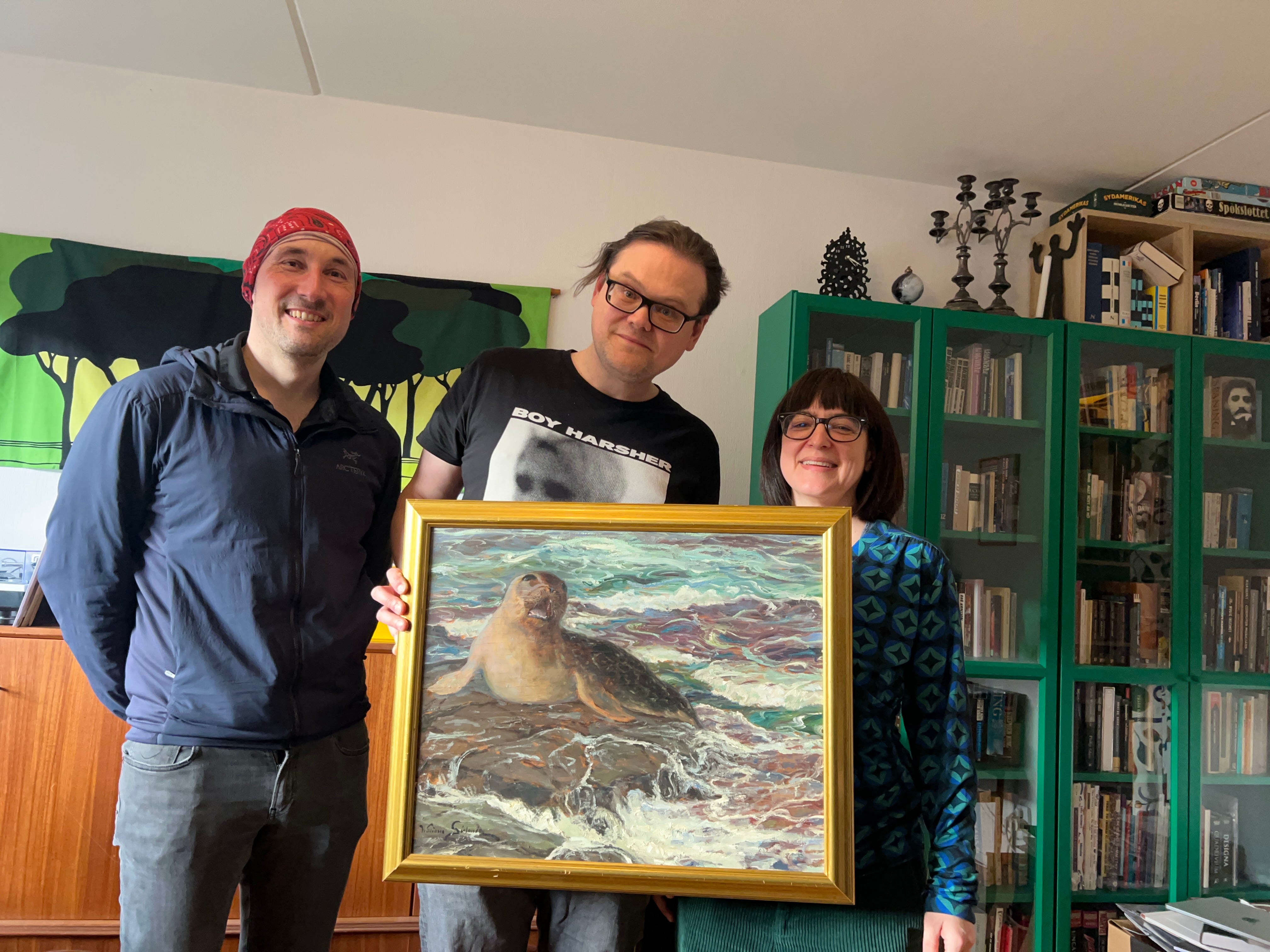
“We have always liked seals,” Thomas explained. “I think that’s why I bought it in the first place.”
His purchase, however, had not entirely been a success.
“It turned out Karin was not very happy about having the seal in the flat.”
“Its facial expression is somewhat … unusual,” Karin replied.
“It ended up in the basement.”
Endangered Species
For the occasion of my visit, the seal had been granted temporary release from the vaults.
Looking more closely, I noticed details that seemed unfinished. The right foreflipper appeared sketchier than the rest of the composition. The face, by contrast, had been painted with remarkable attention.
I opened my laptop and showed Karin and Thomas another painting by Gislander I had located during my research. It depicted three seals resting on wave-washed skerries.
Towering above them, the ‘Angry Seal’.
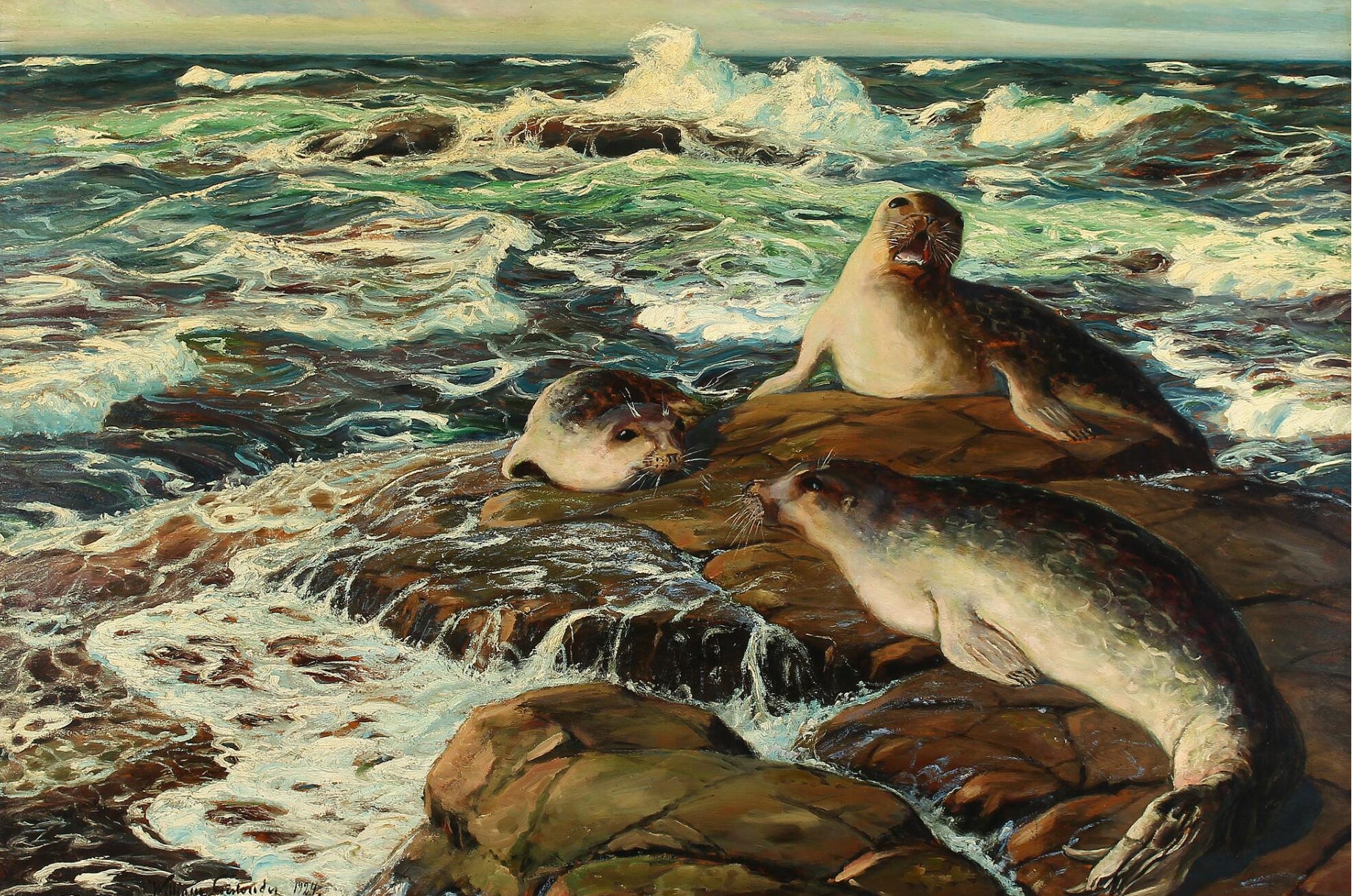
“Perhaps your painting was an early study,” I suggested. “Gislander later returned to the motif and developed it into this larger composition.”
Thomas and Karin leaned closer to compare the two images.
“But there may be a further explanation for its expressive traits,” I continued.
“In an interview from 1924, Gislander speaks about the seals he encountered on Mykines. To put it mildly, he was not particularly fond of them.”
Two pairs of eyebrows rose simultaneously.
I pointed to an interview with William Gislander I had read in Copenhagen the days before. As the painter stated, the seals he observed were wasteful eaters. They tore open the fish, consumed the liver and entrails, and left the rest behind.
He believed they caused serious damage to the local fisheries, prompting a rather radical comment:
“I’d take greatest delight in sending a bullet through their bodies when I saw their terrible gluttony – but you can’t paint and shoot seals at the same time.” 1
The room fell silent. I looked into four shocked eyes.
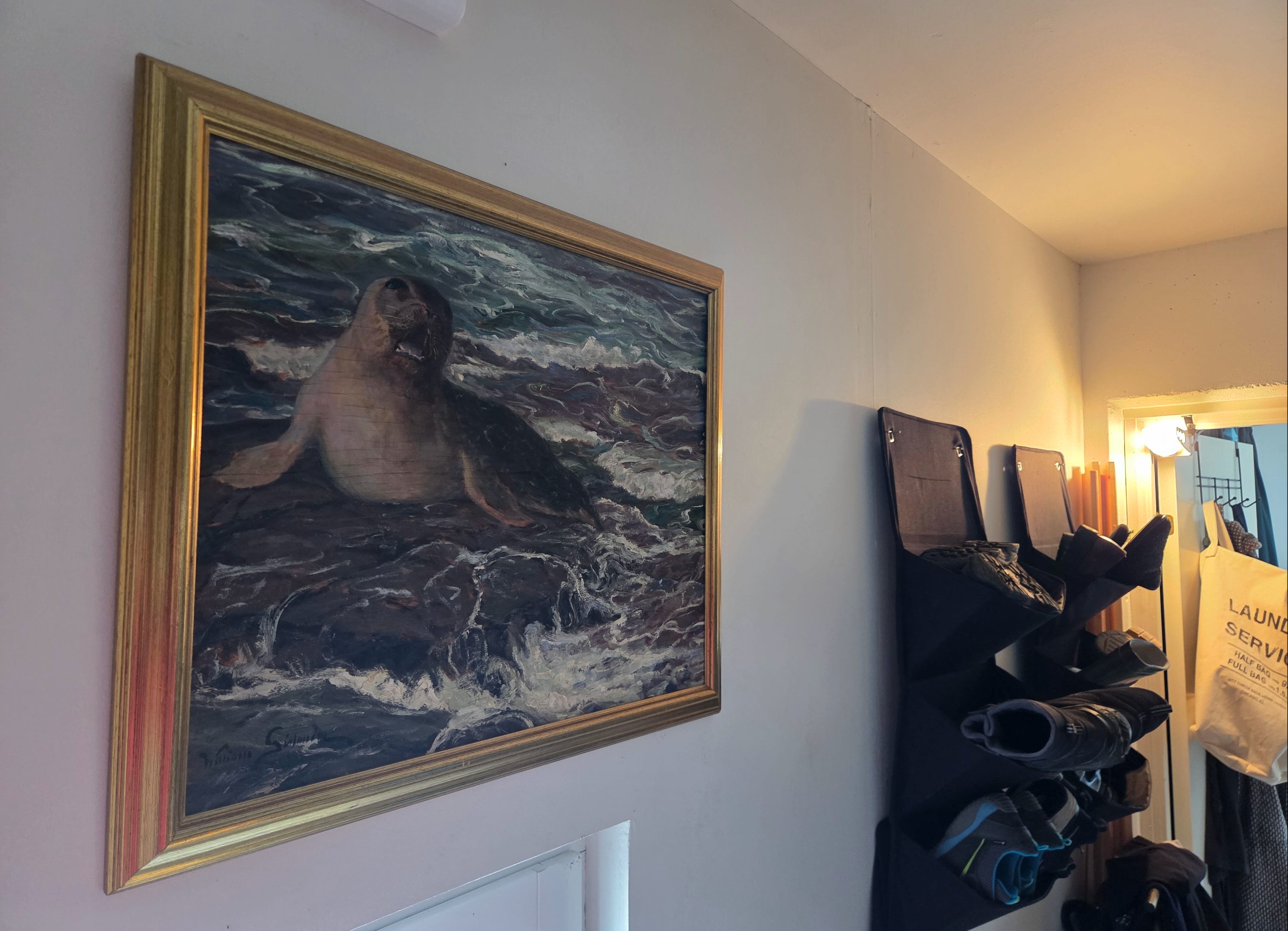
A few weeks later, Thomas sent me a photograph.
The ‘Angry Seal’ had been released from the basement, he wrote. It had been granted a prominent place upstairs now, in the walk-in-closet.
Further Readings and References
Acknowledgments
I am most grateful to Thomas Lennartson and Karin Weidenholm for their warm reception and ‘bra sälskap’ in Lund.
P. N., “Færøerne er et af de smukkeste Lande i Verden”, Dimmalætting, 10.09.1924, p. 2.