

The Steamboat Trail
Three coastal paintings – and a steamer route through the Faroes connecting them.

Two Traces in One Afternoon
“Have you checked Tórshavn Municipality?” Ole said. “They have an art collection, too.”
The weather was mild the day we met in Café Paname, and on summery days like these, Ole wears a hand-picked flower in his ponytail. An artist with an antiquarian curiosity, he has explored many of the nooks and crannies of Faroese history.
We first met a few days into my stay on the islands. Quickly, we connected over a shared passion for the obscure and overlooked.
With a further lead in my notebook, I returned to Listasavn that day.
The same afternoon, a man passed through our office, carrying a painting. As he disappeared into the director’s room, a colleague said, “That’s Helgi Fossádal.”
I recognised the name. A few months earlier, Helgi had replied to an inquiry I had sent by email. A collector, he manages the art collection of Føroya Banki.
“We have one Gislander in our collection,” Helgi had written. That afternoon, he had come to deliver the painting for the lecture I would give that weekend.
I caught Helgi on his way out.
“This should be the southern tip of Kúnoy, as seen from Klaksvík,” he explained.
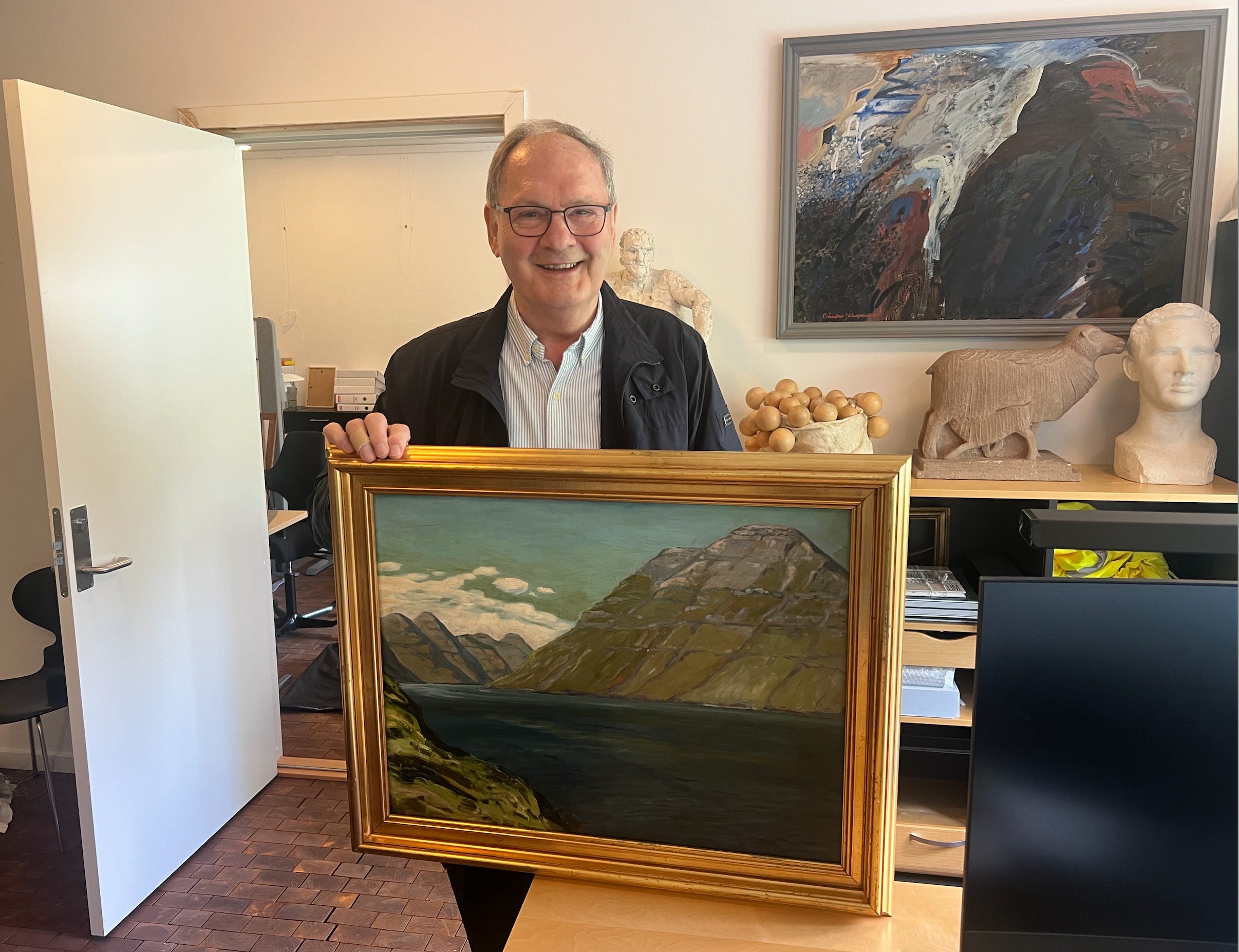
Seaside Views
Helgi’s painting pointed towards a trail Gislander may have followed through the north-eastern Faroes. On the Friday after my presentation, I encountered what seemed to be two further signposts on his path.
Painted oxblood red, Móttøkuhúsið stands out among the houses of central Tórshavn. Built in 1923, it has been used since 1989 to receive official guests. It also houses part of the municipal art collection.
Niels Winther av Sandi collected art throughout his life. A carpenter by trade, he worked in several parts of the North Atlantic. Seventy-five works in his collection depict the Faroes. Tórshavn Municipality acquired it in 1987.
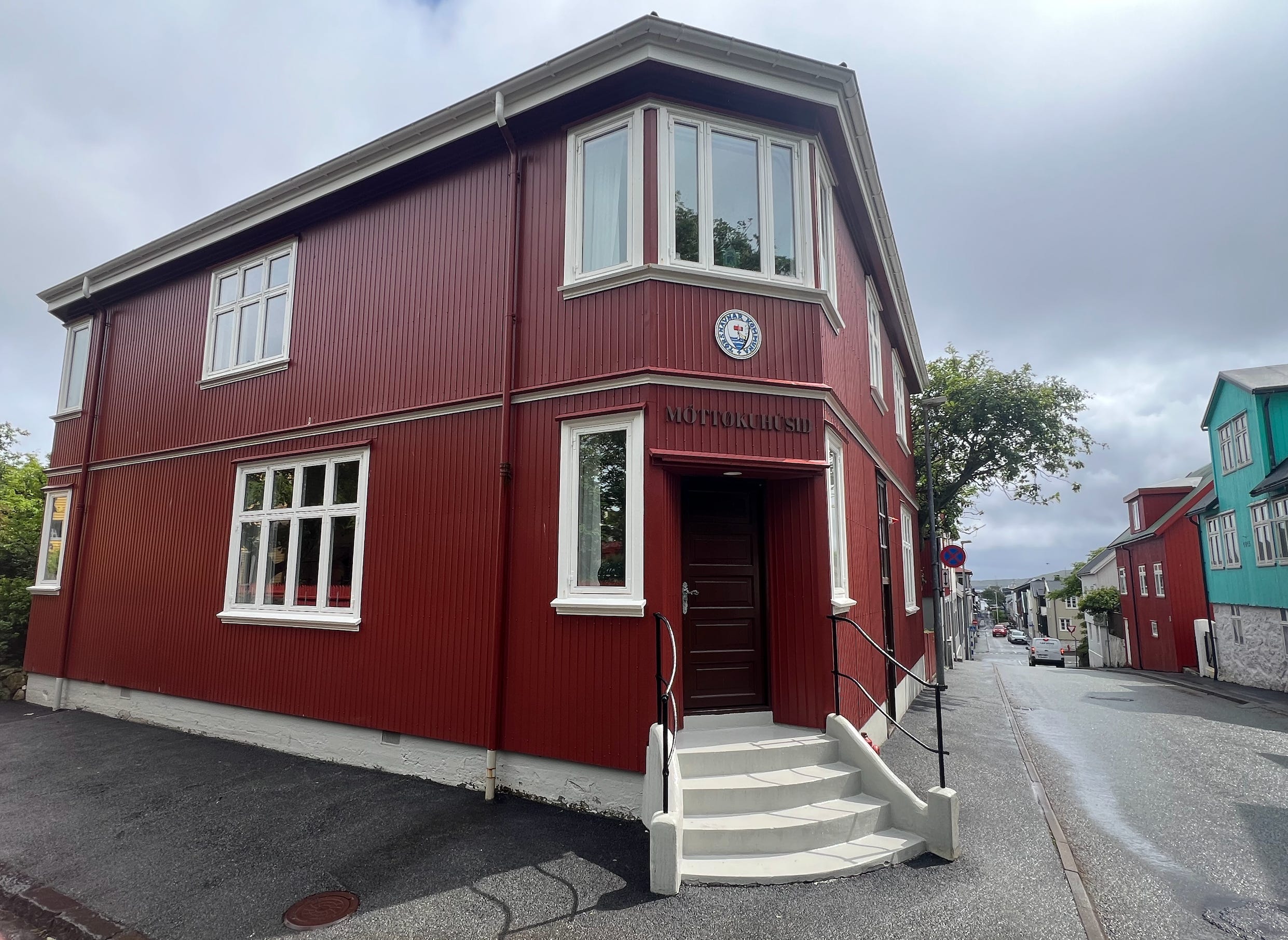
I met Jákup Simonsen on the ground floor of Móttøkuhúsið. Following Ole’s tip, Jákup confirmed that among its roughly 2,500 works, the municipal collection also held two paintings by Gislander.
The rooms inside Móttøkuhúsið were neatly arranged – and rather empty. I followed Jákup into a room filled with coastal views hung salon-style, dominated by a seascape by the Danish painter Christian Blache.
Here, Jákup had set out the two works he had kindly retrieved from storage.
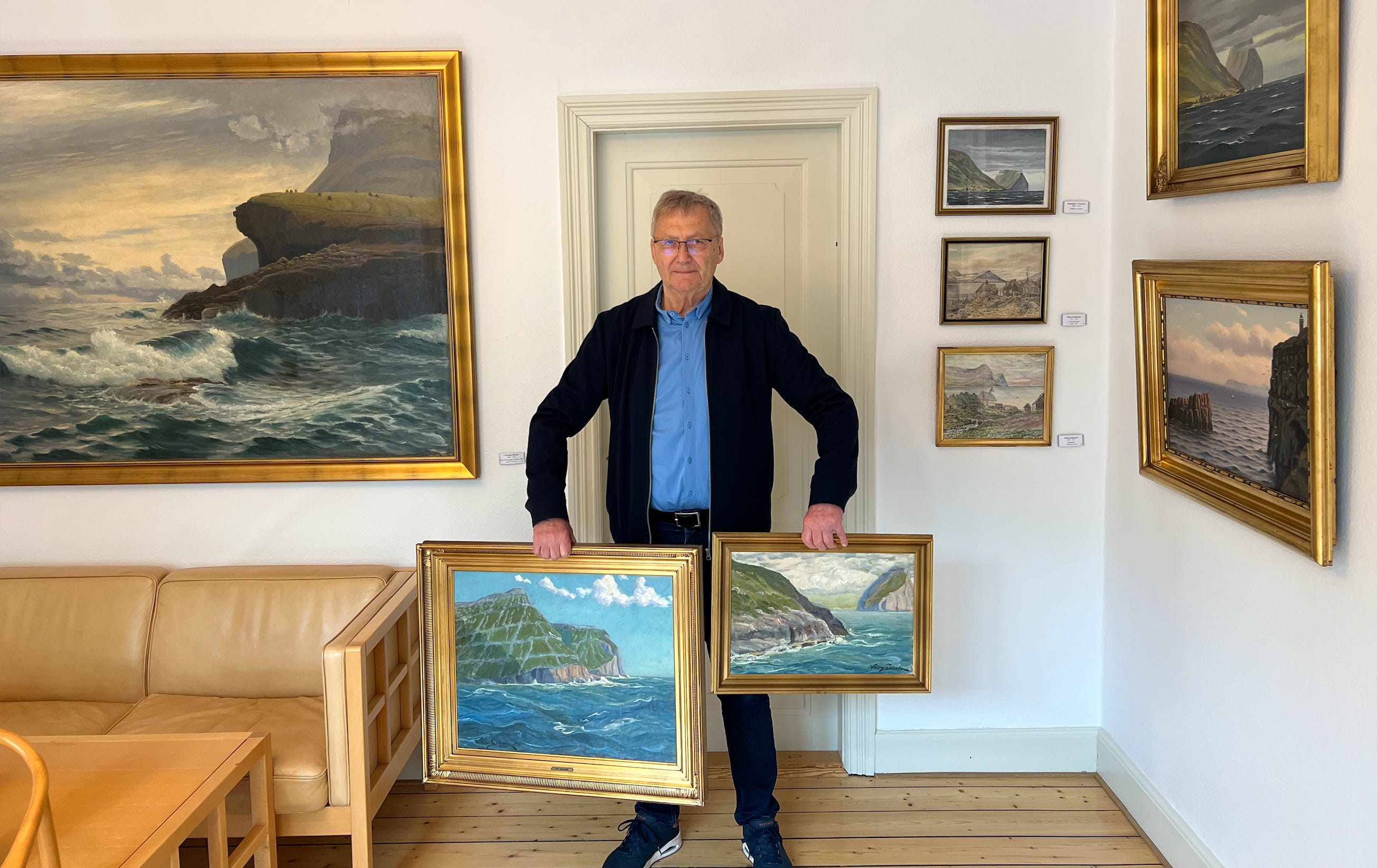
The paintings were loosely worked, apparently with a quick hand. The sketch-like handling, low viewpoints, and expanses of open water suggested that Gislander had painted from a vessel rather than the shore.
Did he have any idea where they were painted?
“No,” Jákup replied. “In the catalogue, it simply says fjøll. That could mean almost any kind of landscape in the Faroes.”
Ports of Call
It was less a title than a placeholder. The three coastal views sent me back to a newspaper interview I had encountered during my earlier research.
Around Ólavsøka 1924, the Danish Nationaltidende sent the reporter Martin Nørgaard to the Faroe Islands to cover the visit of the Danish foreign minister. In a later interview with the local newspaper Dimmalætting, Nørgaard recalled touring the islands aboard the steamer Sleipner together with Gislander, who painted during the voyage.
Sleipner’s circuit ran once a month around the Faroes. The routes were published in the main newspapers. The voyage Gislander shared with Nørgaard around the islands was likely the run in the second half of July.
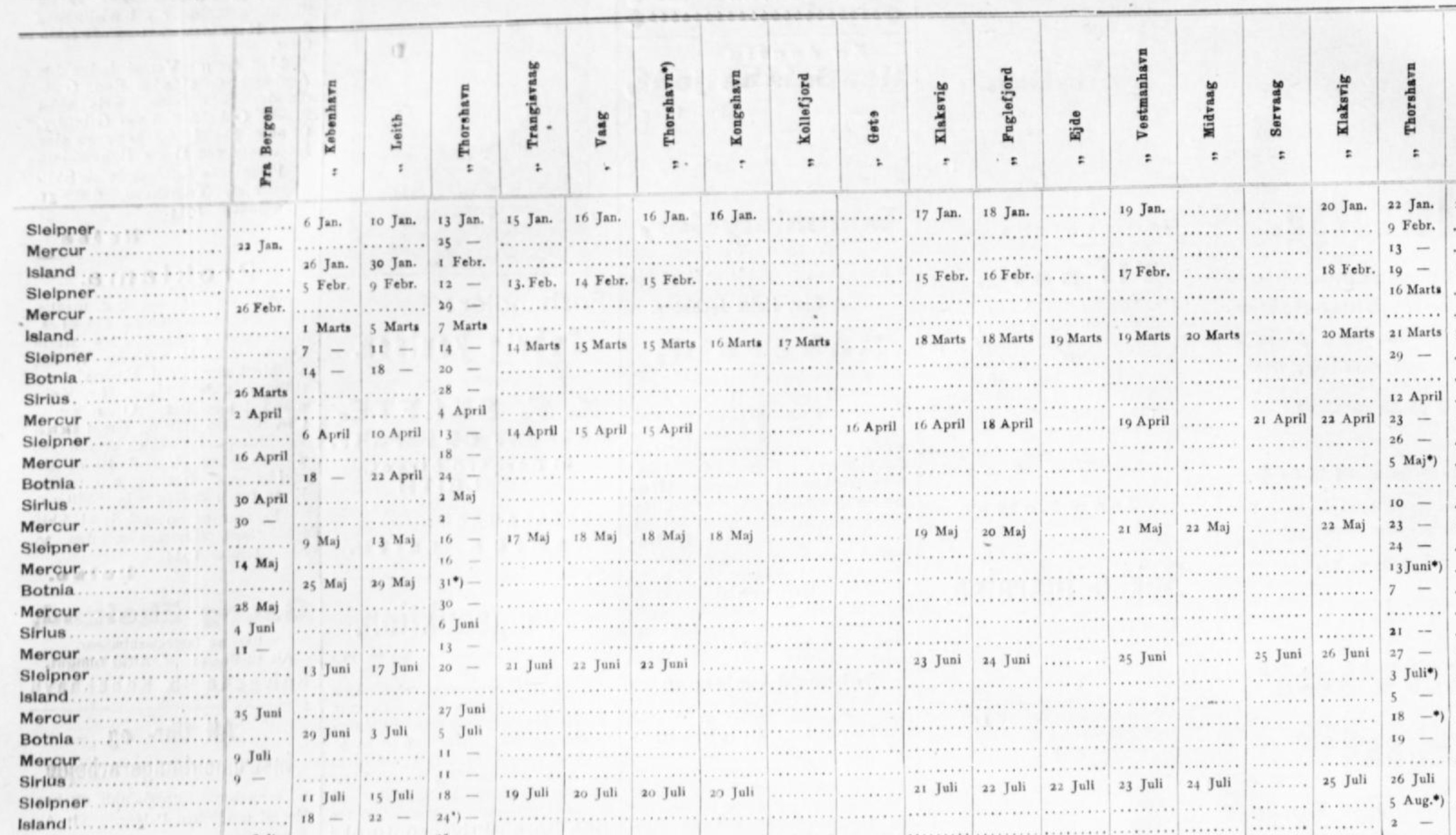
One stop on the steamer’s itinerary that month brought a further Gislander landscape back to mind. Fuglafjørður appeared on Sleipner’s route after Klaksvík – a name connecting with a clue I had received for another painting at my lecture.
The two paintings in the municipal collection remain unidentified so far. But the newspaper schedule changed the question they posed. Rather than asking only which parts of the Faroes Gislander had painted, I could now begin to ask on which journey Sleipner had carried him – and what he might have seen from its deck along the way.
Acknowledgments
I am grateful to Ole Wich, Helgi Fossádal, Jákup Simonsen, and Martin for their support of this research.
This article was produced with the financial assistance of the European Union. The views expressed herein can in no way be taken to reflect the official opinion of the European Union.
